


The Last Days Of Pompeii
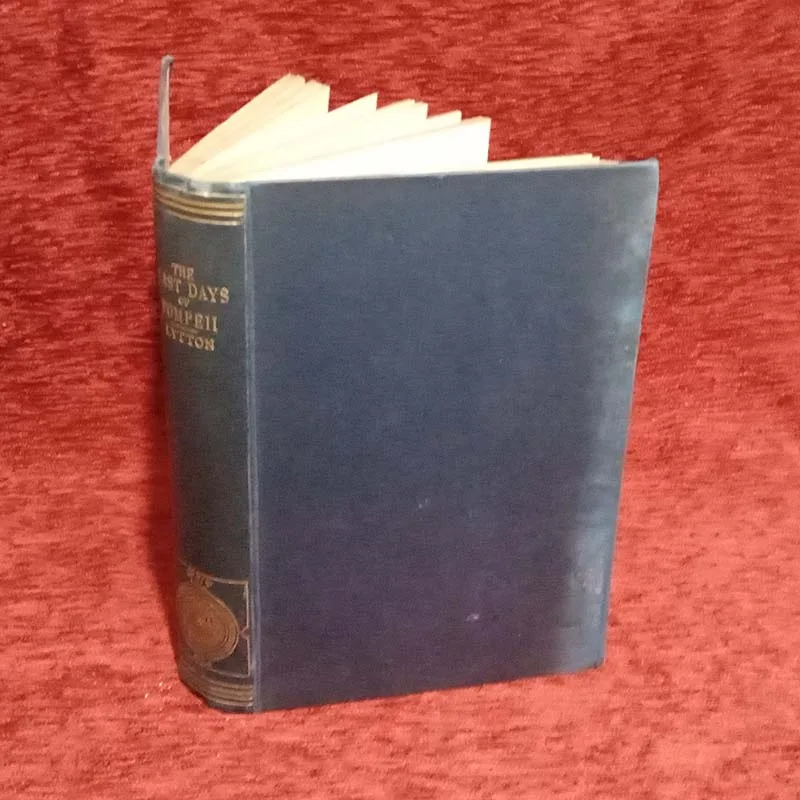
Publisher: Cassell and Company
Format: Hardback
ISBN: none
The Last Days of Pompeii (c.1898)
By Edward Bulwer Lytton | Cassell & Company
ISBN: none (printed when catalogues were adverts at the back, not numbers on the cover)
Condition: Good as sold by Crappy Old Books
If you’ve ever wanted maximum melodrama with your archaeology, The Last Days of Pompeii is the original all-you-can-eat buffet.
Written by Edward Bulwer Lytton – yes, the “It was a dark and stormy night” guy – this is the granddaddy of disaster epics: doomed city, decadent Romans, persecuted Christians, doomed love, sinister priests, hungry lions, and a volcano that has absolutely had enough of everyone’s nonsense.
What’s going on in Pompeii?
In the space of a few hundred gloriously Victorian pages, Bulwer Lytton gives you:
-
Glaucus, a beautiful, noble Greek hero (of course he’s beautiful, this is 19th-century fiction).
-
Ione, the pure, lovely heroine with just the right amount of swoon.
-
Arbaces, the evil Egyptian high-priest with a talent for manipulation and staring darkly at people.
-
Nydia, the blind flower girl who hears everything, knows too much, and will break your heart.
They all circulate through:
-
Banquets
-
Baths
-
Back-stairs intrigue
-
Religious tension
-
And a general atmosphere of “this is fine” as Vesuvius quietly ticks down in the background.
By the time the mountain blows, you’ve had:
-
Romance
-
Treachery
-
Conversion
-
Moral lessons
-
And at least three moments where you think, “Yes, but have any of you considered moving?”
The style: gloriously extra
Bulwer Lytton does not do minimalism. Expect:
-
Big speeches.
-
Bigger descriptions.
-
Sentences that swoop, gesture, and occasionally try on a toga.
This is the full Victorian triple-shot:
-
History, as they understood it
-
Morality, as they preached it
-
Drama, as only a man famous for “dark and stormy nights” could deliver it
Is it over the top? Yes. Is that the point? Also yes.
This particular Cassell edition (c.1898)
This isn’t a flimsy modern reprint. This is a late-Victorian Cassell hardback, the kind that once lived on a proper parlour bookshelf:
-
Deep blue cloth boards, with gilt lettering on the spine and a nice publisher’s emblem at the bottom, radiating “respectable household classic”.
-
Condition: Good – for something around 125+ years old, that’s practically sprightly:
-
Binding sound, no pages trying to escape like citizens fleeing the forum.
-
Some rubbing, light marks, and age-softened corners – honest shelf wear, not structural tragedy.
-
Pages pleasantly toned but fully readable; no ash, no lava, just late-19th-century paper.
-
At the back you’ll find a small archaeological site of its own: publisher adverts, including things like The Magazine of Art at 1 shilling a month – a perfect little time capsule of what a well-read Victorian might subscribe to between eruptions.
Why you might actually want this
-
You love big Victorian novels that take a historical setting and pour every possible emotion into it.
-
You enjoy disaster movies and want to see what they looked like in serialized 19th-century prose.
-
You’re a classics / history buff with a soft spot for “archaeologically dubious but emotionally committed” storytelling.
-
You collect Cassell or late-Victorian cloth bindings and want one with an actual volcano in the plot, if not on the cover.
This is also prime “cosy gothic evening” reading: rain outside, lamp on, everyone in Pompeii resolutely ignoring the occasional ominous rumble.
Condition vs. Catastrophe
-
Physically: Good – reassuringly solid, absolutely not in its own “last days” just yet.
-
Literarily: high drama, thick atmosphere, and a reminder that if a mountain starts smoking, maybe cancel the dinner party.
Perfect for:
-
Fans of vintage disaster stories
-
Lovers of purple prose done with full conviction
-
Anyone who thinks owning a c.1898 Pompeii novel with adverts for 1s art magazines is peak aesthetic
-
Readers who enjoy the quiet irony that a book about a totally preventable catastrophe is now being sold, unhurriedly, by Crappy Old Books
Vesuvius may have buried Pompeii, but this Cassell edition has survived just fine – ready for its next reader to gasp, clutch pearls, and mentally shout, “RUN!” while everyone in the book nobly finishes their subplot first.
Keep browsing: See more History books Other books by Bulwer Lytton
